
DataGroomr's AI Assistant enhances the Rule Designer by using generative AI to automatically create logic for Transform, Data Quality, and Field/Master Merge rules based on natural language prompts. With minimal input, users can describe the logic they need, and the Assistant will generate the corresponding rule blocks directly on the canvas.
Accessing the AI Assistant
You can access the AI Assistant from the "Design with AI" tab located in the left panel of the rule editor. This opens an interactive prompt area where you can describe your rule logic or try one of the provided examples.
The AI Assistant can also be launched from the AI-generated quick start template — the first, gradient-colored template shown when the Rule Designer opens — which generates an AI-recommended rule prompt for you.
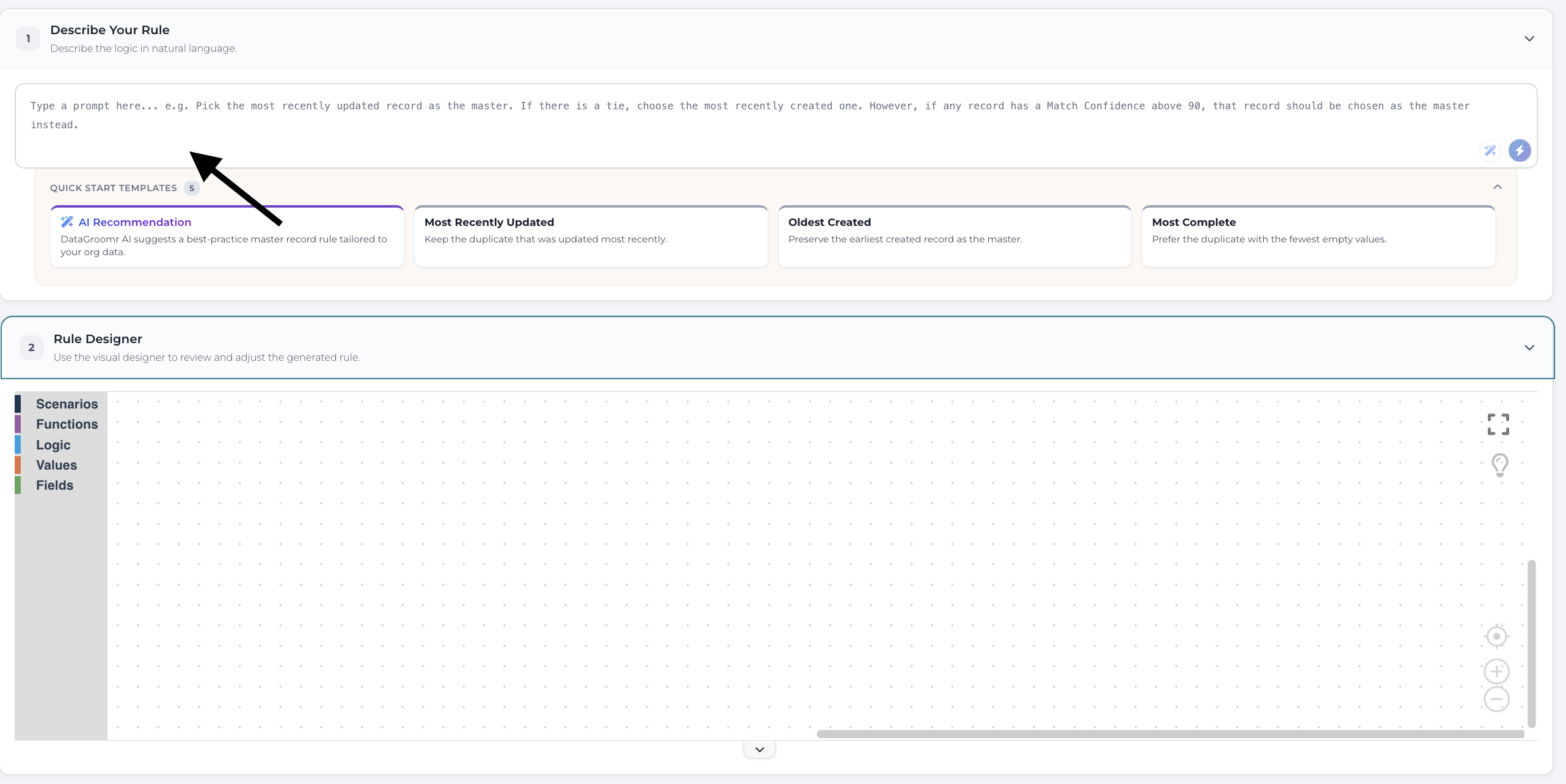
Workflow Overview
Here's how to interact with the AI Assistant effectively:
1. Write a Prompt
Modify an existing rule or write a new description to guide the logic you want generated.
Note: In the prompt box, use @ to reference a specific field. For example: Update @status based on the most recent @lastModifiedDate
Then click Generate (or press Cmd+Enter) to populate the canvas with the corresponding logic.
If your prompt is unclear or invalid, the AI will provide specific error messages identifying the issue. The AI may also ask clarifying questions and offer suggestions to help you refine your input for better results.
2. Load Generated Rules
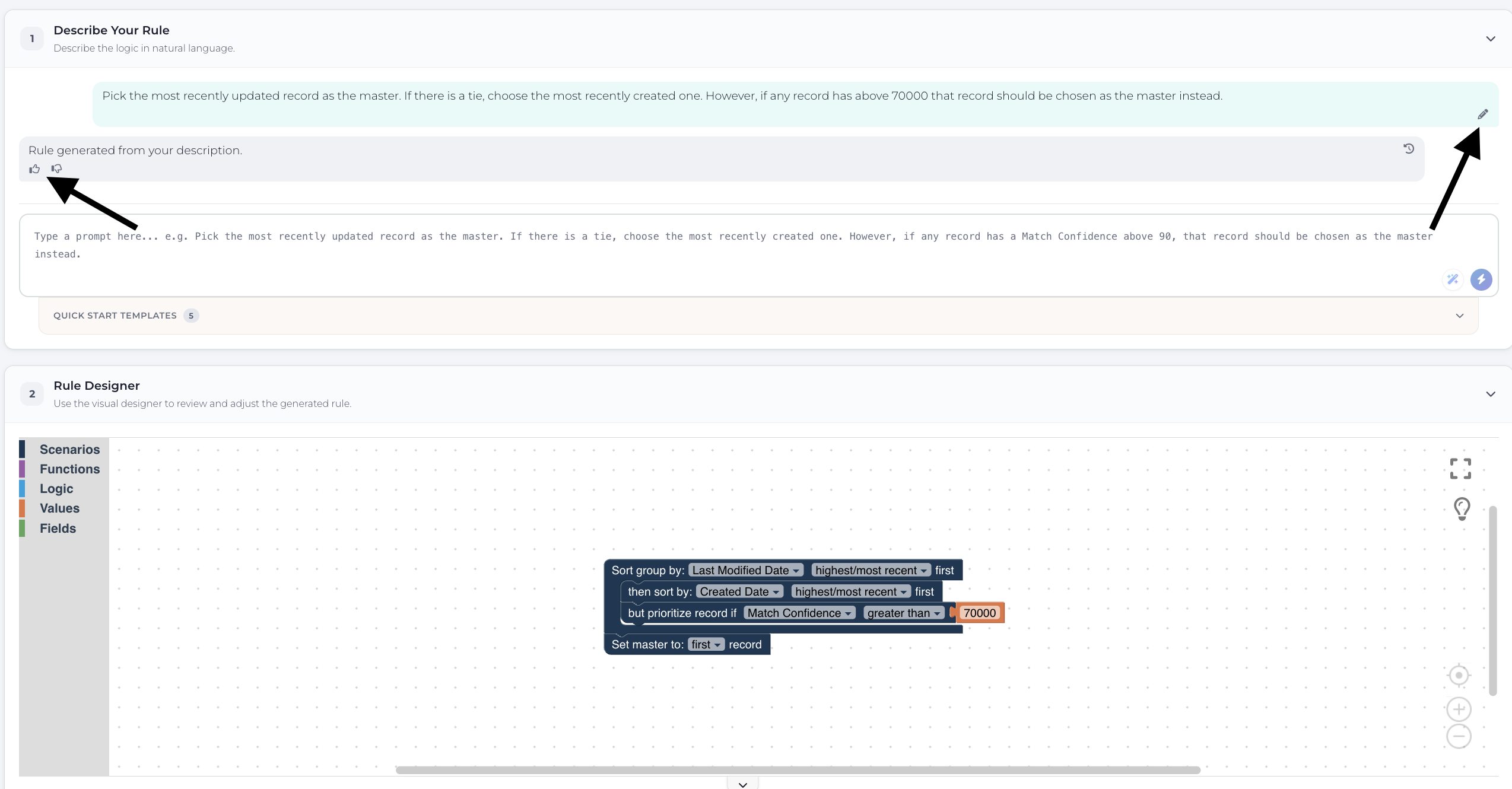
Select any prompt from the history to instantly reload its corresponding rule logic on the canvas.
3. Provide Feedback
Rate the output using thumbs-up or thumbs-down icons. Your feedback helps us enhance the Assistant's performance.
Key Features
1. Rule Editing
Click the edit icon to refine or rephrase your description. This updates the rule logic without needing to start from scratch.
2. Editable Prompt History
Quickly revisit and modify previous prompts. When selected, the corresponding logic will be restored on the canvas.
3. Feedback for Improvement
Use the thumbs-up or thumbs-down icons to rate AI-generated results. This feedback helps improve the quality and accuracy of the AI model over time.
4. Field-Aware Prompting
Reference specific fields using @fieldname to guide the AI in building logic tied to your dataset structure. Prompts can be entered step-by-step to define more complex behaviors.
Example Prompt
Update empty fields in the master record with values from the most recently modified record. If multiple records share the same modified date, break ties using the latest created date.
This prompt will produce a logic block like the one shown below, ensuring your merge strategy handles modification precedence and tie-breakers effectively.
By combining natural language prompting with visual logic generation, the AI Assistant enables both novice and advanced users to build intelligent, precise rules in a fraction of the time.
Explain Rule
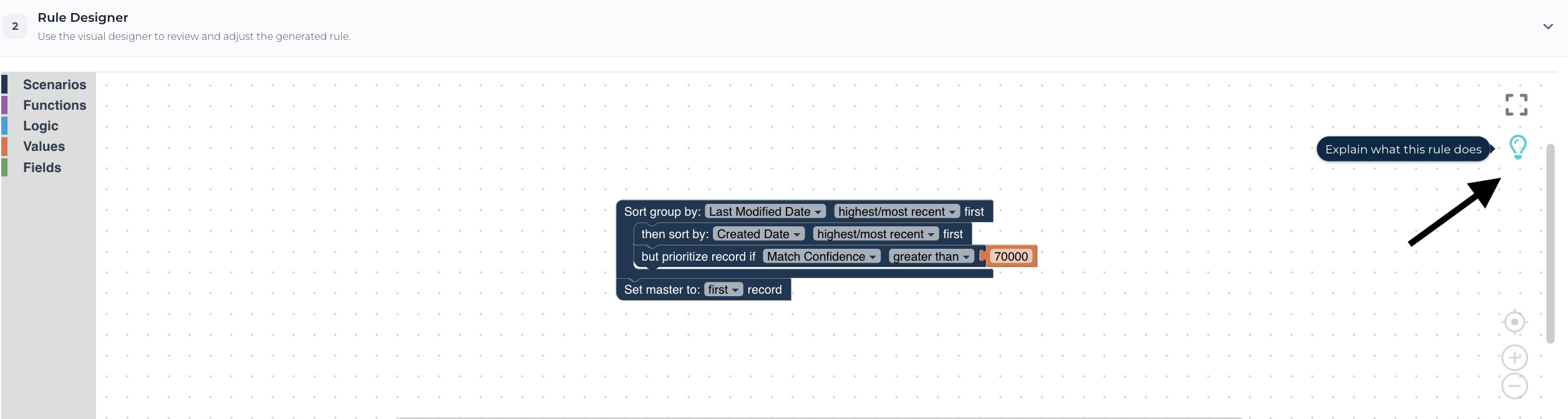
The Explain rule feature helps users understand what a transform rule does by providing an AI-generated explanation. When a rule contains blocks, an Explain rule button (tooltip: "What does this rule do?") is available next to the Fullscreen button. Selecting it opens the chat panel (if not already open) and displays a clear, plain-language description of the rule's purpose, logic, and expected outcome. The chat history is saved with the rule, allowing explanations and prompts to remain available when the rule is reopened later.
AI-Generated Merge Rules tailored to your org
AI-generated merge rules help you create effective merge logic without starting from scratch. When enabled, DataGroomr uses AI to analyze your Salesforce org and suggest merge rules that align with your data structure and common best practices.
The AI considers your org's metadata, including field types and permissions, as well as standard data quality principles such as prioritizing complete, recent, and verified values. The generated rules serve as a recommended starting point and can be reviewed, modified, or extended to meet your specific requirements.